
- en
A. Surgical scalpel
B. Surgical gloves
C. Catheter
D. Pacemaker
In the American military, they regularly look for ways to save money on fuel. And one of the major fuel consumers is actually mussels, algae, and seaweed. Now, why is that? They tend to attach themselves to the part of the ship that is underwater, forming a large mass there. When the ship sails, it has to consume much more fuel to compensate for the extra mass.
In principle, there are solutions for this: you can bring the ship to port regularly to sand everything down, but that is quite expensive and takes a lot of time. Another solution that has been tried is incorporating certain chemicals into the ship's paint, which were supposed to be lethal to those algae. But since that turned out to be toxic to other marine life as well, that wasn't a good solution either.
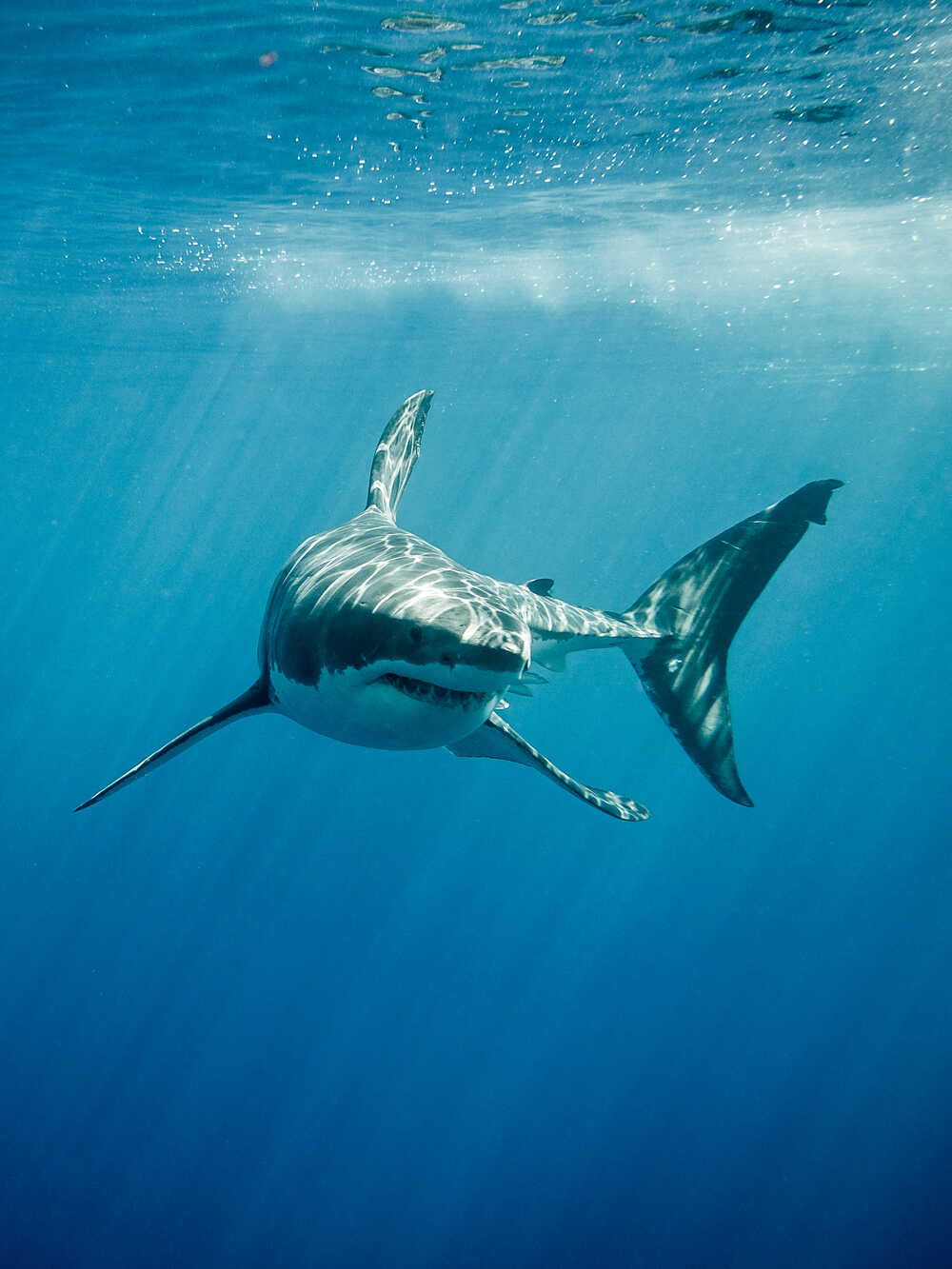
People then wondered whether it is actually possible at all for large surfaces to remain underwater for a long time without algae attaching to them. Whales, for example, come with algae. Sharks on the other hand, are super smooth. When researchers looked more closely at the shark's skin, they saw that it consisted of minuscule protrusions in an irregular pattern to which algae do not want to or cannot attach, and therefore move on. This inspired researchers to investigate to what extent the same structure of shark skin could be applied to the hulls of ships. It also inspired a company that manufactures catheters to finish the inside of those catheters in such a way that there are also minuscule protrusions, making it much more difficult for bacteria to climb up. As a result, bacterial infections can be prevented in people who have an indwelling catheter.