- en
A. Osteoarthritis
B. Itch
C. Hair loss
D. Anxiety
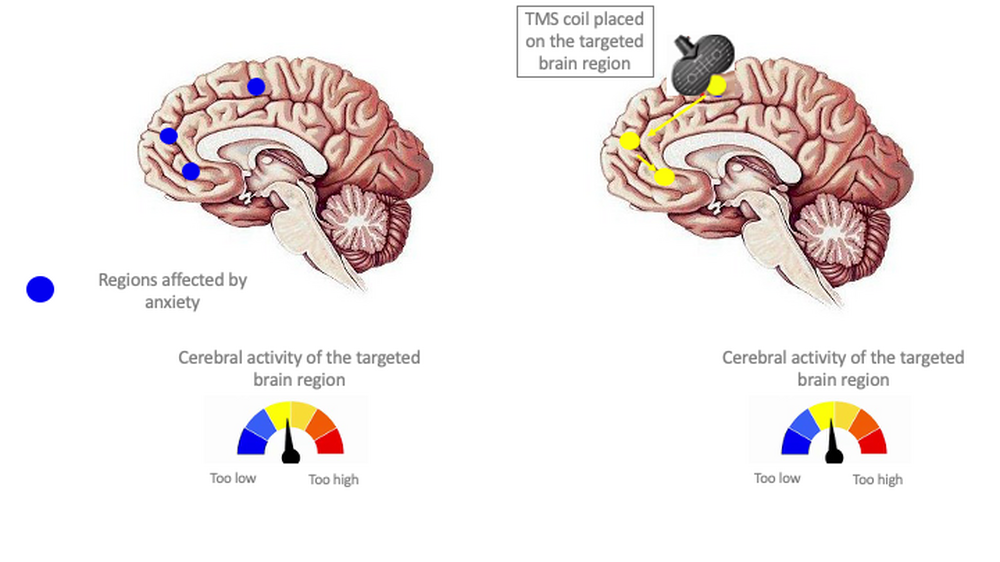
When the activity of certain regions of nerve cells is too high or too low, it can cause feelings of depression or anxiety.
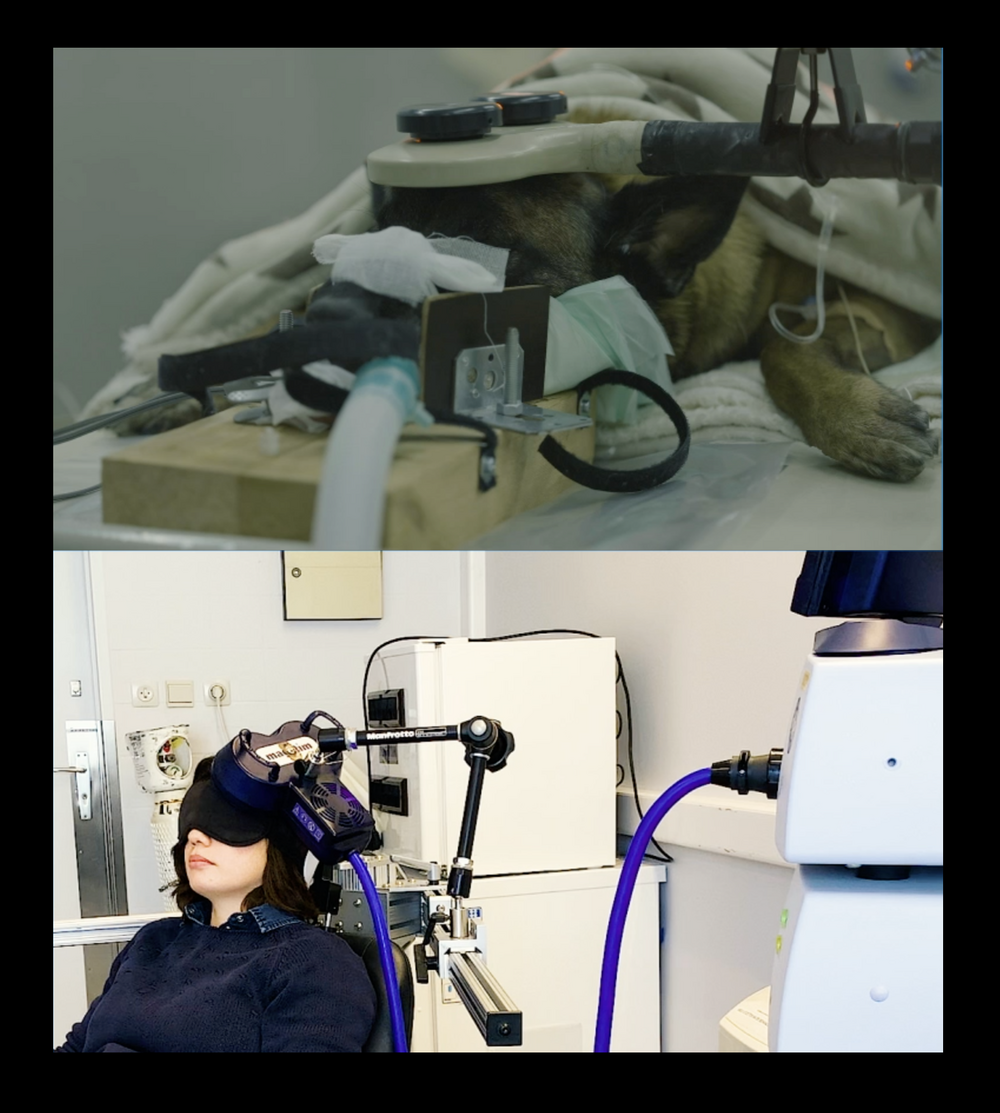
Transcranial magnetic stimulation (TMS) is a procedure that uses magnetic fields to stimulate nerve cells in the brain to improve such symptoms.
These nerve regions have been identified in both humans and dogs, and the technology developed for humans is now also used successfully in dogs to treat anxiety.
The treatment is meant to balance the activity of nerve cells and have them produce balanced amounts of dopamine, serotonin and norepinephrine. Researchers want to optimize the treatment and for that they need to understand what the treatment does exactly. To do so, they would ideally take a sample of cerebrospinal fluid to measure various markers.
Unfortunately, taking a cerebrospinal fluid sample in humans is risky. A lumbar punction is a lot less risky, but not as informative as when you take fluid from higher up. Fortunately, dogs have a different anatomy with a much wider opening between the skull and the spine, which allows a much safer sampling of cerebrospinal fluid. Therefore, dogs who are treated with these magnetic pulses at Ghent University now help to finetune treatment protocols for both dogs and humans.