
- en









These expert-led masterclasses offer participants hands-on guidance and strategic insights into critical topics in animal health innovation. Each 45-minute session is designed to deepen understanding, build skills, and support actionable progress in the development, funding, and commercialization of novel technologies. The sessions are particularly valuable for entrepreneurs, researchers, and early-stage companies navigating the animal health innovation pathway.
The Unified Vaccine Platform: A Standardized Framework for Versatile and Rapid Animal Vaccine Development:
Analogous to a Swiss Army knife, where a single standardized design supports multiple functions, the Unified Vaccine Platform (UVP) applies one coherent technological framework to a broad range of veterinary vaccine applications. The core of the UVP is an antigen capsule technology that enables end-to-end process standardization—from antigen design through regulatory submission to industrial-scale manufacturing—while preserving pathogen-specific immunogenicity.
The UVP has been validated across seven vaccine programs targeting both enveloped and non-enveloped viruses, demonstrating robustness, transferability, and manufacturing compatibility. As a key case study, VeroBlue-3, a recombinant bluetongue virus serotype 3 vaccine, progressed from concept to EMA dossier completion within nine months, highlighting substantial acceleration over conventional inactivated virus vaccine development.
Beyond supporting “traditional” vaccine programs, the platform directly addresses a major unmet need: the rapid generation of field-adapted vaccines targeting variants of highly mutating pathogens, as well as precisely geography-matched vaccines tailored to regional strain diversity. This capability is expected to impact pipeline design and lifecycle management across portfolios.
This presentation will provide validation data, development workflows, and manufacturing performance of the UVP, and will outline how its standardized, recombinant approach differs from mRNA-based vaccines. By combining scientific versatility with predictable, scalable processes, the UVP targets high medical need and offers substantial economic potential through faster development, platform re-use, and more agile response to evolving pathogen landscapes.
Speaker for this session: Ulrike Diesterbeck (Verovaccines)
Ruminant Livestock Vaccine Development from Concept to Commercialisation:
This masterclass will cover the journey from initial proof of concept to vaccine commercialisation, describing the challenges often found along the way with examples of how these have been tackled to ensure that much-needed veterinary vaccines are able to find their way to market to address increasingly complex disease challenges faced by the livestock industry.
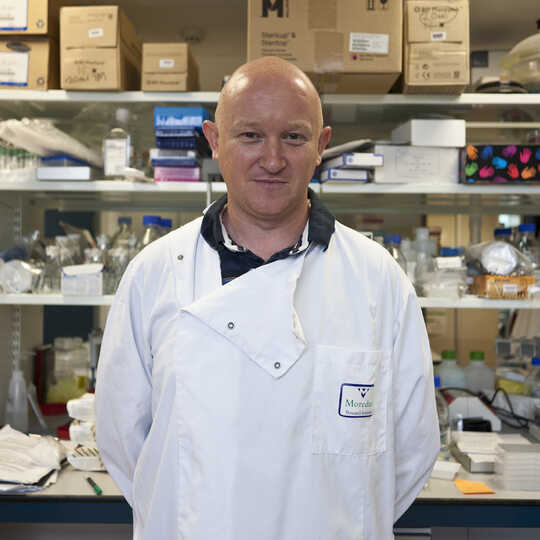
Speaker for this session: Stewart Burgess (Moredun)
Illuminating Mechanism of Action in Veterinary Antibody R&D: From Biology to Functional Bioassays
This Masterclass will present a joint Promega– Boehringer Ingelheim session focused on illuminating mechanism-of-action (MoA) strategies in veterinary antibody research and development through the application of luminescent bioassays. The session will demonstrate how MoA-driven assay design can support veterinary antibody programs from discovery through early development, bridging biological understanding with translational decision-making.
Participants will learn how luminescent reporter, binding, and functional bioassays can be leveraged to generate sensitive, robust, and biologically relevant data that inform target validation, functional potency, and early development decisions. The session will integrate scientific perspective with practical, real-world experience drawn from industry case studies.
In addition, the Masterclass will highlight Promega Tailored Research Services (TRS) as a collaborative partner in co-developing and optimizing MoA-relevant bioassays tailored to program-specific needs. This session is designed for animal health R&D scientists seeking innovative, scalable bioanalytical approaches to strengthen MoA confidence and accelerate veterinary antibody development.
Speakers for this session: Jennifer Serriere-Di Bartolo (Promega) and Jens Radzimanowski (Boehringer Ingelheim)
Beyond Monoclonal Antibodies: Next Generation Therapeutics for Animal Health - Multi-specificity for Complex Disease and Other Opportunities
Monoclonal antibodies have disrupted animal health, significantly impacting the management of conditions with high unmet needs. As their influence grows, this talk explores the next generation of protein therapeutics designed for complex, multi-pathway diseases. Multi-specific proteins are essential to control disease pathology and offer the potential for both symptom relief and disease modification. To remain viable, strategies must achieve multi-specificity without the burden of complex engineering or elaborate manufacturing. Beyond multi-specificity, this session also explores emerging opportunities for protein-based therapeutics and prophylactics.
Speakers for this session: Charles Owen (272Bio Limited)
From Venom to Value: Developing a Field-Deployable Antidote Through the FDA’s Rarely Used Animal Rule Pathway
Snakebite envenomation remains one of the most urgent yet under addressed emergencies in companion animals, where outcomes are often determined by how quickly treatment begins. This masterclass explores the development of a first in class, portable oral antidote designed for immediate, field based administration by pet owners, a broadly effective rescue therapy targeting toxin classes present in more than 95 percent of medically important snake species. Using Ophirex’s varespladib program as a case study, the session will examine the scientific rationale for mechanism based venom neutralization, cross species translational pharmacokinetic bridging, and the design of controlled animal models to establish efficacy when traditional placebo controlled trials in dogs and humans are unethical or infeasible. It will further explore the unconventional application of FDA Animal Rule principles, including engagement with the Center for Veterinary Medicine, to advance approval under regulatory ambiguity. Participants will gain insight into aligning human and veterinary development pathways while creating parallel scientific and commercial value across markets, offering a strategic blueprint for innovators redefining how life saving veterinary therapeutics can be developed when conventional clinical pathways are not possible.
Speaker for this session: Jeremy Gowler (Ophirex)
Accelerating RNA Therapeutics from Design to In Vivo Validation: An Integrated End-to-End Platform
This presentation will showcase Quantoom’s integrated, end-to-end platform for RNA-based technologies, enabling the rapid design, development, and production of both mRNA and self-amplifying RNA (saRNA) therapeutics and vaccines. The session will highlight how a fully streamlined approach—from antigen design to in vivo validation—can accelerate RNA program development and support translational decision-making.
Participants will gain insight into two case studies demonstrating the breadth and performance of the platform. The first features an internally developed H5N1 HPAI vaccine candidate, illustrating the complete workflow from mosaic sequence design through RNA production to in vivo challenge studies. The second, conducted in collaboration with a partner, focuses on a PPRV program in a sheep model, where advanced sequence optimization was used to design mRNA and saRNA candidates and benchmark their immunogenicity against commercially available lipid nanoparticle (LNP) systems.
Speaker for this session: Ashiqul Haque (Quantoom Biosciences)
A High-Titer CHO Cell-Based Integrated Platform to Accelerate Veterinary Biologics Development
Chinese Hamster Ovary (CHO) cells are the predominant host system for the production of recombinant therapeutic biologics. Their ability to perform complex post-translational modifications, combined with high expression capacity and scalability in suspension culture, makes them widely applicable for recombinant proteins, monoclonal antibodies, and vaccines. In veterinary medicine, CHO-based systems offer significant potential; however, broader adoption is often limited by cost-of-goods (COGs) considerations.
Here, we present an integrated CHO-based platform designed to support the efficient development and manufacturing of veterinary biologics. The platform encompasses discovery, CMC development, non-clinical animal evaluation, and commercial-scale manufacturing, enabling streamlined progression from early-stage research to market readiness.
An optimized CHO expression system tailored for veterinary applications has been developed. By combining proprietary high-expression vector systems with chemically defined media, monoclonal antibody titers of up to 39 g/L were achieved in a 20-day intensified fed-batch process. This platform supports the development of recombinant proteins, including growth factors and monoclonal antibodies for companion animal therapeutics.
In addition, a structure-based nanoparticle polymer antigen platform has been established for vaccine development targeting animal coronaviruses, herpesviruses, and flaviviruses. Compared with conventional inactivated vaccines and virus-like particle (VLP) approaches, this platform demonstrates potential advantages in antigen design flexibility and production efficiency.
Overall, the integration of high-yield CHO expression technology with scalable manufacturing processes provides a viable approach to reducing COGs while maintaining product quality, thereby facilitating broader adoption of recombinant biologics in animal health.
Speaker for this session: Xiao Shen (Canton Biologics)
Designing Cost‑Effective Vet Vaccine Manufacturing: From Biology to Cost of Goods
Veterinary vaccines face extreme cost pressure, biological complexity, and limited scalability with legacy platforms. This interactive masterclass invites participants to work through real manufacturing decisions, comparing planar systems, microcarriers, and modern fixed‑bed bioreactors. Using concrete case studies and detailed COG models, attendees will explore how biology‑aligned process design can unlock higher yields, faster scale‑up, and dramatically lower cost per dose.
Speakers for this session: Saci Iken and Thomas Robert (Univercells Technologies)